



SaaS ArchitectureReal-Time DashboardsAPI & MicroservicesCloud Infrastructure

Custom SaaS Development

We architect and build custom SaaS platforms that scale from first user to millions. From multi-tenant backends and real-time dashboards to subscription billing and cloud infrastructure — every layer is engineered for long-term growth.

The Challenge

Why This Is Harder Than It Looks

Building a SaaS product sounds straightforward until you are six months in with a codebase that cannot handle its own success. Most SaaS projects fail not because the idea is bad, but because the architecture was never designed for what comes after launch.

You start with a monolith because it ships fast. Then your first enterprise customer needs tenant isolation, and suddenly your database schema is fighting you. Your real-time features work for ten users but collapse under a thousand. Your billing integration was bolted on as an afterthought, and now every edge case — failed payments, plan downgrades, prorated refunds — becomes a week-long fire drill.

The hidden complexity in SaaS is not the features your users see. It is the infrastructure beneath them: connection pooling that handles concurrent load, background job queues that process without blocking the UI, webhook systems that retry gracefully, audit logs that satisfy enterprise compliance. These are the systems that separate a prototype from a product.

Most development teams build the visible layer first and defer the hard problems. By the time those problems surface — a customer loses data, the app goes down under load, an integration breaks silently — the cost of fixing them has multiplied tenfold. You end up choosing between a painful rewrite and an endless cycle of patches.

Security and compliance add yet another dimension most teams discover too late. Your enterprise customers will send you security questionnaires, demand SOC 2 compliance, and require data residency guarantees before signing a contract. If your architecture was not designed with these requirements in mind — encrypted data at rest, comprehensive audit logging, role-based access control with granular permissions — retrofitting them into a live product is a project measured in months, not weeks.

The founders who succeed are the ones who invest in the right architecture before they need it. Not over-engineering, but building on foundations that bend instead of break when growth arrives.
Our Approach

How Zulbera Delivers Differently

We treat every SaaS engagement as an infrastructure problem first and a feature problem second. Before a single line of UI code is written, we design the data model, API contracts, auth boundaries, and deployment topology that your product will live on for years.

Our architecture is multi-tenant from the start — row-level security, tenant-scoped API keys, and isolated data paths that let you serve startups and enterprises from the same codebase. We build real-time systems on WebSockets and event-driven pipelines so your dashboards reflect reality, not five-minute-old snapshots.

Every API we ship is versioned, documented, and designed for third-party consumption so you can open your platform to integrations without rewriting anything. Background jobs, webhook delivery, rate limiting, and audit logging are built into the core — not bolted on after your first enterprise deal.

We deploy to your cloud with infrastructure-as-code, automated CI/CD, and monitoring that pages you before your customers notice. The result is a SaaS platform that scales horizontally, passes security audits, and gives your engineering team a codebase they can extend confidently for years.

Testing is embedded in our development cycle, not treated as a phase at the end. We write integration tests against real databases, run contract tests between services, and perform load testing against production-scale data before every release. When your first enterprise customer asks for an SLA, you can offer one with confidence because every component has been verified under pressure.

01

Kickoff workshop to define product scope, user personas, and technical constraints

02

System architecture: database schema, API contracts, auth model, and infrastructure plan

03

Sprint-based development with weekly demos, staging environments, and continuous deployment

04

Load testing, security audit, and production cutover with monitoring and alerting

Capabilities

What We Build

Backend Architecture & Data Layer

The backbone of any SaaS product is its backend — and getting it wrong is the most expensive mistake you can make. We design PostgreSQL schemas with multi-tenant isolation from the start, using row-level security policies and tenant-scoped indexes that keep queries fast as your data grows. Our API layers are built in Node.js with TypeScript for end-to-end type safety, structured around clear domain boundaries that map to your business logic. We implement connection pooling, query optimization, and read replicas so your database handles thousands of concurrent users without breaking a sweat. Every migration is versioned and reversible, and every schema change is tested against production-scale data before it ships.

Subscription & Billing Systems

SaaS billing is deceptively complex. Plan tiers, usage-based pricing, prorated upgrades, failed payment recovery, tax compliance, invoicing — each one is a rabbit hole that can consume weeks of engineering time if handled ad hoc. We integrate Stripe or your preferred payment processor at a deep level, building billing logic that handles every edge case: trial-to-paid conversions, seat-based licensing, overage charges, dunning flows that recover failed payments automatically. Our billing systems generate audit-ready invoices, handle multi-currency pricing for international customers, and expose a self-service portal where your users manage their own subscriptions without creating support tickets.

Admin Dashboards & Analytics

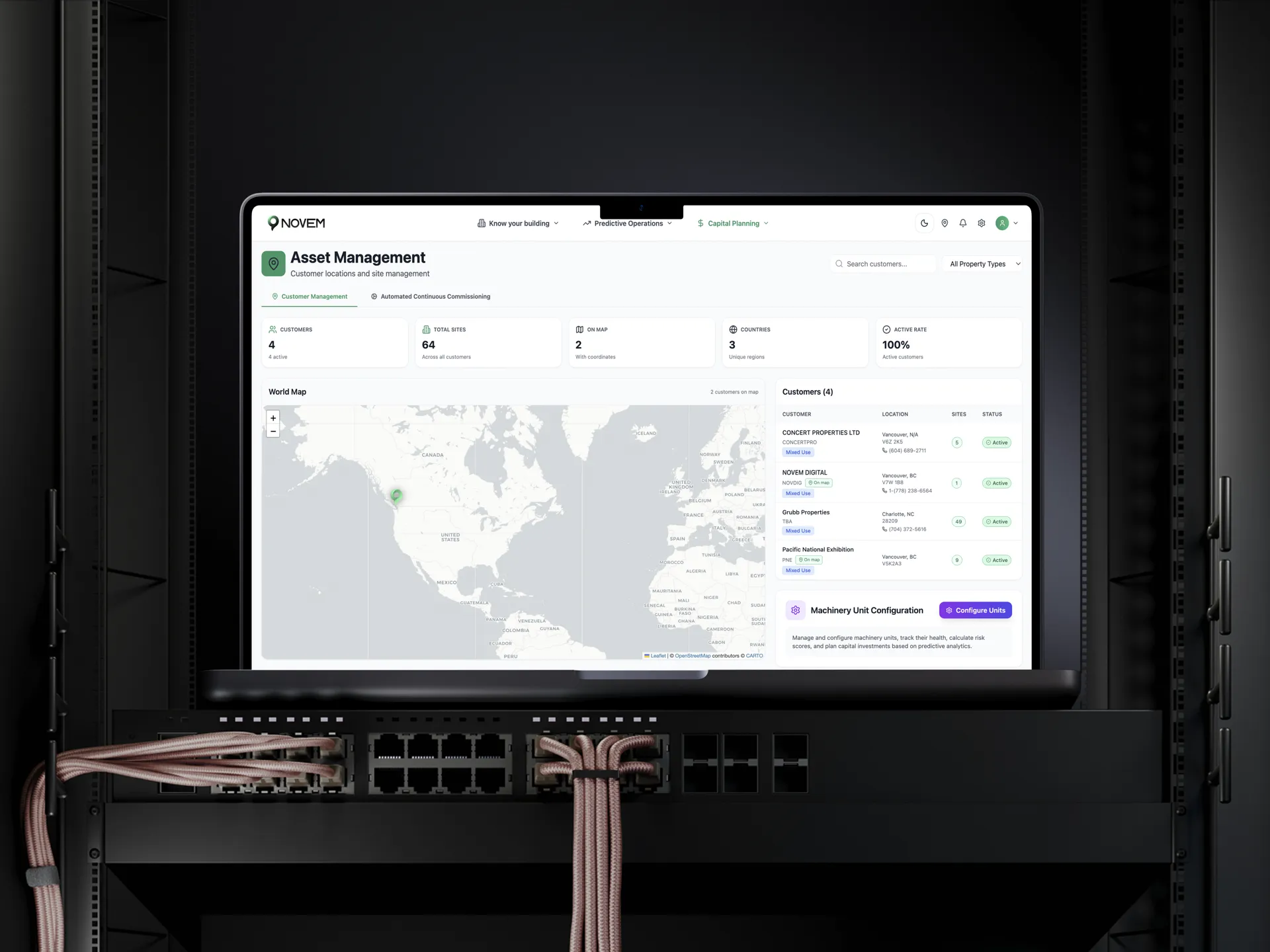
Your internal team needs visibility into what is happening across your platform — user activity, revenue metrics, system health, feature adoption. We build admin dashboards in React with real-time data pipelines that surface the metrics that matter. These are not generic analytics overlays; they are purpose-built interfaces designed around your operational workflows. Customer support sees user timelines and can impersonate accounts for debugging. Finance sees MRR, churn, and cohort analysis. Engineering sees error rates, API latency percentiles, and deployment history. Every dashboard loads in under two seconds and updates in real time via WebSocket connections.

API Infrastructure & Integrations

A SaaS platform that cannot integrate is a SaaS platform that cannot grow. We build APIs that are versioned, rate-limited, and documented with OpenAPI specifications that generate SDKs automatically. Our webhook delivery system handles retries with exponential backoff, dead letter queues, and delivery logs so your customers can debug integration issues themselves. We design GraphQL schemas for complex data relationships and REST endpoints for simple CRUD — choosing the right tool for each use case rather than forcing everything through one paradigm. OAuth2 and API key management are built in so third-party developers can integrate securely from day one.

Security & Compliance Engineering

Enterprise customers demand security before they demand features. We architect SaaS platforms with security built into every layer — not bolted on before an audit. Authentication uses industry-standard protocols: OAuth 2.0, SAML for enterprise SSO, and multi-factor authentication with TOTP and WebAuthn support. Role-based access control is implemented at the API level with granular permissions that map to your customers' organizational structures. Data encryption covers both transit (TLS 1.3) and rest (AES-256), with key rotation policies managed through your cloud provider's KMS. Audit logs capture every significant action with immutable, tamper-evident storage that satisfies SOC 2 and GDPR compliance requirements. We implement data residency controls so you can guarantee where customer data lives, and build data export and deletion workflows that handle right-to-erasure requests without manual intervention.

Performance Engineering & DevOps

A SaaS product that is slow is a SaaS product that churns. We instrument every layer of the stack with distributed tracing, structured logging, and real-time alerting so you know about performance regressions before your users do. Our infrastructure-as-code approach using Docker and AWS means your staging environment is an exact replica of production — no more surprises at deploy time. We configure auto-scaling policies, CDN caching strategies, and database connection management that keep your p99 latency under 200ms even during traffic spikes. Load tests run in CI so every pull request is validated against realistic traffic patterns before it merges.

Technology Stack
ReactNext.jsTypeScriptNode.jsPostgreSQLGraphQLAWSDocker
Timeline

How Long It Takes

A well-scoped SaaS MVP typically ships in 10–14 weeks. Larger multi-tenant platforms scale from there.

Phase 01

Discovery & Architecture

2 weeks

Scope, user personas, data model, API contracts, and infrastructure plan — settled before any production code.

Phase 02

UX & UI Design

2 weeks

Interface design, core user flows, and a clickable prototype aligned to the architecture.

Phase 03

Sprint Development

6–8 weeks

Weekly demos, staging environments, and continuous deployment across backend, APIs, and dashboards.

Phase 04

Launch & Hypercare

1–2 weeks

Load testing, security audit, production cutover, and the first 30 days of post-launch support.

Deliverables

What's Included

Every engagement ships as a complete, documented system that you fully own — nothing is held back as an upsell after launch.

Multi-tenant system architecture & database schema
Full-stack application — frontend, backend, and versioned APIs
Subscription & billing integration (Stripe or your processor)
Admin dashboard with real-time analytics instrumentation
Security review & audit logging (SOC 2 / GDPR-ready)
Cloud infrastructure as code + automated CI/CD pipeline
Documentation, runbook & full infrastructure handover
30 days of post-launch hypercare
Full source code & IP ownership — committed to your accounts
Investment

How Much Does Custom SaaS Development Cost?

Most SaaS engagements fall in the €50,000–€120,000 range. Scope, integrations, and multi-tenancy requirements drive the final number. Every engagement starts with a paid discovery sprint to scope accurately before committing to a full build.

MVP

€20,000 – €50,000

Focused MVP with core features, auth, Stripe billing, and single-region deployment.

Ideal for pre-seed founders validating a SaaS idea with real users.

Growth

€50,000 – €120,000

Multi-tenant architecture, real-time features, third-party integrations, and enterprise SSO.

Suits seed-to-Series A companies scaling to their first 500 customers.

Enterprise

€120,000+

Full-scale platform with compliance tooling, multi-region deployment, and dedicated support.

For companies with existing revenue needing production-grade infrastructure.

Regions We Serve

Global Reach

A global studio with presence in Hong Kong and Europe. We work with ambitious companies across:

Cities

Countries

FAQ

Frequently Asked Questions

How long does a typical SaaS MVP take to build?
A well-scoped MVP with core features, auth, billing, and basic admin usually takes 10-14 weeks. We spend the first two weeks on architecture and design before writing production code, which prevents expensive rewrites later. The timeline depends heavily on the complexity of your domain logic and the number of third-party integrations required.
Can you work with our existing codebase?
Yes. We regularly take over codebases from previous teams or in-house developers. We start with a thorough code audit to assess architecture quality, test coverage, and technical debt. From there we create a prioritized plan that balances feature development with the refactoring necessary to unblock future growth.
What cloud provider do you recommend for SaaS applications?
We default to AWS for most SaaS products because of its breadth of managed services, mature multi-region support, and enterprise compliance certifications. That said, we have deployed successfully on GCP, Azure, and Railway. We choose based on your team's existing expertise, compliance requirements, and budget constraints.
How do you handle multi-tenancy?
We implement row-level security in PostgreSQL with tenant-scoped access policies, ensuring data isolation at the database level rather than relying solely on application logic. This approach scales cleanly, passes enterprise security audits, and allows us to offer dedicated database instances for high-value customers without rewriting the application layer.
Do you provide ongoing support after launch?
Yes. Most of our SaaS clients retain us on a monthly basis for feature development, infrastructure management, and performance optimization after launch. We offer flexible retainer arrangements that scale with your needs, and we can also train your in-house team to take over the codebase with full documentation and knowledge transfer sessions.
How do you handle security and compliance requirements like SOC 2 or GDPR?
Security is built into our architecture from day one, not retrofitted before an audit. We implement encrypted data storage, role-based access control, comprehensive audit logging, and data residency controls as part of the core platform. For SOC 2 and GDPR specifically, we build automated data export and deletion workflows, consent management, and immutable audit trails. Our clients have passed enterprise security reviews from Fortune 500 companies using the infrastructure we built.
How much does custom SaaS development cost in 2026?
A focused MVP that covers architecture, design, core features, billing, and production deployment typically lands in the €60,000–€120,000 range. A scaled v1 with multi-tenancy, advanced integrations, and enterprise-grade observability runs €150,000–€300,000. Full multi-product SaaS platforms with multiple modules and team-expansion engagements start at €350,000 and scale from there. We provide fixed pricing per phase after a paid discovery sprint, so there are no surprise invoices and you always know what each stage costs before it starts.
What's included in a Zulbera custom SaaS engagement?
A complete engagement covers product strategy, system architecture, UX and UI design, full-stack engineering, infrastructure setup, security review, analytics instrumentation, and the first 30 days of post-launch hypercare. You also receive full documentation, infrastructure handover materials, and a runbook covering deployment, monitoring, and incident response — everything a future team would need to operate the platform without us. Nothing is held back as an upsell after launch.
Who owns the code and intellectual property when working with Zulbera?
You own everything — source code, infrastructure accounts, design files, documentation, and all intellectual property — from day one. Code is committed to your GitHub or GitLab organization, not ours. Cloud accounts on AWS, GCP, or Azure are created in your name with your billing. We hold no rights to your data or product, and our contracts are explicit about this. Premium studio standards mean zero vendor lock-in and zero ambiguity around ownership.
What does a custom SaaS development company actually do?
A custom SaaS development company designs, builds, and scales the technical product that founders, CTOs, or internal teams cannot deliver fast enough alone. That includes the architecture decisions that determine whether the product can reach ten thousand paying customers without a rewrite, the multi-tenancy and billing systems that enterprise buyers expect, and the engineering velocity that turns a roadmap into shipped software. We operate as your senior engineering team — not a code outsourcing shop.
Custom SaaS vs off-the-shelf SaaS — when does building beat buying?
Buy when the workflow is generic — accounting, CRM, helpdesk — and a mature category leader already solves it well. Build custom when the workflow is your competitive advantage, when no off-the-shelf product fits your data model, when integration costs exceed the tool itself, or when per-seat pricing breaks down at your scale. The decision is rarely about features. It is about whether the workflow is core to how you win, and whether you can afford to wait for a vendor's roadmap to catch up to your business.
Should we build our SaaS in-house or hire a development agency?
In-house wins when you already have an experienced engineering manager in place, a 12+ month runway for hiring and ramp-up, and a roadmap that shifts week by week based on user feedback. An agency wins when you need to ship inside a fixed window, when the senior engineering talent you need would take 6–9 months to hire, or when your team is strong on domain but light on infrastructure, design, or architecture. Many of our clients use us to ship v1 quickly and then transition us into a coaching role as their internal team grows around the codebase we delivered.
Let's talk

Ready to build
something great?

Whether it's a new product, a redesign, or a complete rebrand — we're here to make it happen.

View Our Work
Avg. 2h response 120+ projects shipped Based in EU

Trusted by Novem Digital, Revide, Toyz AutoArt, Univerzal, Red & White, Livo, FitCommit & more